







What is Brain Fog and How Do You Actually Clear It
Brain fog is one of those things everyone recognises but nobody quite knows how to explain. You sit down to work and the words won't come. You walk into a room and forget why. A simple task takes three times as long as it should. Your thoughts feel thick, slow, unreliable.
It is not laziness. It is not stress in the everyday sense. And it is not something you simply have to accept.
Brain fog is a real physiological state with identifiable causes — and that means it has real, evidence-based remedies. This guide covers what brain fog actually is, why it happens, and what you can do to clear it. Not quick fixes. Not hype. Just the science, and what it means for your daily life.

What Is Brain Fog, Exactly?
Brain fog is not a medical diagnosis. It is a descriptive term for a cluster of cognitive symptoms — difficulty concentrating, slowed thinking, poor short-term memory, mental fatigue, and a general sense that your brain is not running at full capacity.
The clinical literature describes it as "cognitive impairment" or "subjective cognitive decline." But those phrases do not capture how it feels: like thinking through treacle.
Common symptoms include:
- Difficulty concentrating for more than a few minutes
- Forgetting words mid-sentence
- Short-term memory lapses
- Slowed mental processing — tasks take longer than they should
- Mental exhaustion, even after rest
- Difficulty making decisions or switching between tasks
Brain fog is a signal. Your brain is telling you that something in your biology is off-balance. The goal is to work out what.
What Causes Brain Fog? The Main Drivers
Brain fog rarely has a single cause. It tends to be the result of several overlapping factors, each making the others worse. Here are the most common ones.
Poor Sleep
Sleep is when the brain consolidates memory, clears metabolic waste via the glymphatic system, and repairs itself. When sleep is cut short or disrupted, cognitive function suffers almost immediately.
Research shows that even a single night of sleep deprivation raises amyloid-beta levels in the brain — a protein associated with cognitive decline. Poor sleep also elevates cortisol and increases neuroinflammation, creating a feedback loop that compounds over time.
If you are consistently sleeping fewer than seven hours, brain fog is an expected outcome. It is not a mindset problem.
Chronic Stress and High Cortisol
Cortisol is your body's primary stress hormone. In short bursts, it is useful — it sharpens focus, raises energy, and prepares you to act. But when cortisol stays elevated over days and weeks, it becomes neurotoxic.
Sustained high cortisol is particularly damaging to the hippocampus — the brain region responsible for memory formation and retrieval. Research has linked chronic stress to hippocampal atrophy, which directly impairs the ability to form and recall information.
This is why stress-driven brain fog feels different from tiredness. It is not just low energy — it is a structural disruption to how your brain processes information.
One evidence-based way to support the stress response is through adaptogenic herbs that help regulate cortisol. Ashwagandha, in particular, has been shown in clinical trials to reduce cortisol levels and support cognitive performance under stress.

Neuroinflammation
Inflammation is your immune system's response to threat. In the brain, immune cells called microglia release signalling molecules — cytokines — that can disrupt normal communication between neurons.
When this neuroinflammatory response becomes chronic, it slows cognitive processing, impairs memory, and creates the sensation of mental heaviness that defines brain fog. Key inflammatory cytokines involved include TNF-alpha, IL-1, and IL-6.
What drives neuroinflammation? Poor sleep, chronic stress, gut dysbiosis, processed food diets high in refined carbohydrates, and sedentary behaviour — often all acting simultaneously.
Diet and Blood Sugar Instability
The brain is the most metabolically demanding organ in the body. It runs almost exclusively on glucose — but it needs a steady, stable supply. When blood sugar spikes and crashes (from a diet high in refined carbohydrates and sugar), the brain's fuel supply becomes unreliable.
Insulin resistance — where cells no longer respond efficiently to insulin — compounds this further. It impairs neuroplasticity, disrupts neurotransmitter production, and promotes neuroinflammation. Many people with persistent brain fog have some degree of blood sugar dysregulation without knowing it.
Deficiencies in specific nutrients also matter. B vitamins (particularly B12, B6, and folate), omega-3 fatty acids, magnesium, and vitamin D all play direct roles in neurological function. Low levels of any of them can contribute to cognitive sluggishness.
Gut Health
The gut-brain axis is a bidirectional communication highway. What happens in your gut has a direct bearing on your cognitive state.
Gut dysbiosis — an imbalance in the microbiome — increases intestinal permeability. This allows inflammatory compounds to enter the bloodstream and, eventually, the brain. Poor gut health is also linked to impaired production of neurotransmitters, including serotonin and dopamine, both of which influence focus and mood.
Sedentary Behaviour
Physical movement increases blood flow to the brain, promotes the release of brain-derived neurotrophic factor (BDNF — the brain's growth hormone), and reduces neuroinflammation. Even short bouts of walking have been shown to improve attention and working memory acutely.
A sedentary lifestyle removes these benefits. If you sit for most of the day and rarely move, your brain is being denied one of its most effective natural supports.
How to Actually Clear Brain Fog: Evidence-Based Approaches
Clearing brain fog is not about one intervention — it is about reducing the combined burden on your brain. Here is what the evidence supports.
Prioritise Sleep Quality, Not Just Duration
Seven to nine hours is the target. But quality matters as much as quantity. Fragmented sleep — even if it adds up to seven hours — does not provide the same restorative benefit as uninterrupted sleep.
Practical steps that improve sleep architecture:
- Consistent sleep and wake times, including weekends
- Avoiding caffeine after 2pm
- Reducing blue light exposure in the hour before bed
- Keeping the bedroom cool and dark
- Avoiding alcohol — it suppresses REM sleep even in moderate amounts
Reishi mushroom has a long history of use for sleep quality. It contains compounds called triterpenes that interact with GABA receptors in the brain — the same receptors targeted by sleep medication, but through a gentler, non-habit-forming pathway. What to expect when taking Reishi covers this in more detail.

Manage Cortisol Through the Day
Cortisol follows a natural rhythm — it should be highest in the morning and taper throughout the day. Modern life disrupts this pattern constantly: artificial light, late-night screens, irregular eating, and high-pressure schedules all push cortisol out of its natural arc.
Supporting cortisol regulation:
- Morning sunlight exposure within the first 30 minutes of waking — this anchors circadian rhythm and sets up a healthy cortisol curve
- Regular, moderate exercise (excessive intensity raises cortisol further)
- Consistent meal timing
- Adaptogens that support the HPA axis — the system that regulates your stress response
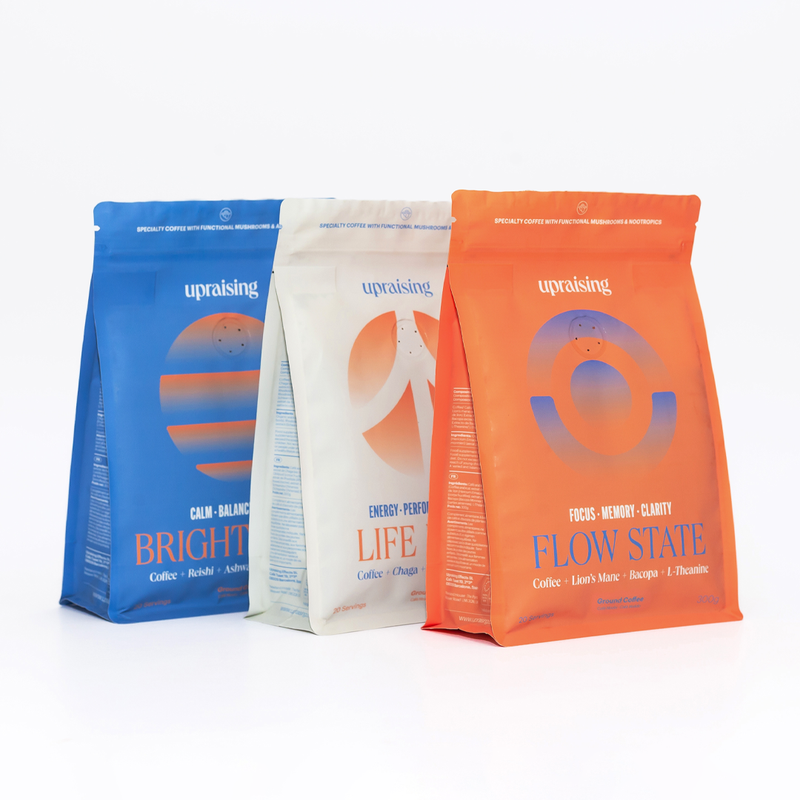
Ashwagandha is among the most studied adaptogens for cortisol regulation. Multiple randomised controlled trials have shown it reduces serum cortisol and improves subjective stress scores over 8–12 weeks. It appears in Bright Mood, Upraising's adaptogenic coffee designed for stress and mood support.

Stabilise Blood Sugar
Reducing cognitive fluctuations that come from blood sugar instability is one of the most underrated improvements you can make to your mental clarity.
- Eat protein and fat with every meal to slow glucose absorption
- Reduce refined carbohydrates and ultra-processed foods
- Avoid eating large amounts of carbohydrates on an empty stomach
- Consider eating your largest carbohydrate portions later in the day, when insulin sensitivity is often higher
- Walk after meals — even 10 minutes significantly blunts glucose spikes
Chaga mushroom, featured in Upraising's Life Force Coffee, has emerging research suggesting it supports antioxidant defence and metabolic markers — though it is worth noting this research is still early-stage and mostly preclinical.

Address Nutritional Gaps
Before reaching for any supplement, consider the basics:
- B12: Essential for myelin (the protective coating on nerve fibres). Deficiency causes cognitive impairment that is often mistaken for other conditions.
- Omega-3 fatty acids (DHA/EPA): Structural components of brain cell membranes. Low DHA is associated with slower cognitive processing.
- Magnesium: Involved in over 300 enzymatic reactions, including those governing neurotransmitter function. Widespread deficiency in Western diets.
- Vitamin D: Receptors for vitamin D exist throughout the brain. Deficiency is linked to cognitive impairment and mood disorders.
A blood panel checking these four markers is a worthwhile starting point for anyone dealing with persistent brain fog.
Use Nootropics and Adaptogens Thoughtfully
Nootropics are substances that support cognitive function. Adaptogens are a subset of plants and fungi that help the body adapt to stress. Both have legitimate, evidence-backed roles in supporting mental clarity — but they work best as part of a broader lifestyle approach, not as standalone fixes.
Lion's Mane Mushroom
Lion's Mane (Hericium erinaceus) is the most well-researched functional mushroom for cognitive function. It stimulates the production of Nerve Growth Factor (NGF), a protein critical for the growth, maintenance, and survival of neurons.
A 16-week randomised controlled trial found that adults taking Lion's Mane extract showed significantly improved cognitive function compared to placebo, with benefits increasing over the supplementation period. It is not a stimulant — it supports the underlying structure of cognitive performance rather than pushing it artificially.
Flow State Coffee contains 250mg of Lion's Mane extract per serving, alongside Bacopa Monnieri and L-Theanine. Flow State+ is the powder equivalent for those who prefer flexibility in how they take it.

Bacopa Monnieri
Bacopa is an Ayurvedic herb with a strong evidence base for memory and learning. It works by increasing dendritic branching in the hippocampus — the brain region responsible for memory formation — and by reducing oxidative stress in the brain.
Bacopa is a slow-acting ingredient. Studies typically run for 12 weeks before measuring outcomes, so consistency is essential. It rewards patience.
L-Theanine
L-Theanine is an amino acid found naturally in green tea. It promotes alpha brain wave activity — the relaxed, alert state associated with calm focus — and moderates the stimulating effects of caffeine without blunting them.
This is why pairing L-Theanine with caffeine (as in functional coffee blends) tends to produce cleaner, more sustained alertness than caffeine alone, with less of the jitteriness and crash.
Rhodiola Rosea
Rhodiola is an adaptogen with a strong research record for mental fatigue. It has been shown to improve cognitive performance and reduce fatigue in demanding situations — it has been studied in medical students during exam periods, shift workers, and athletes.
It acts partly by modulating monoamine oxidase activity and partly by supporting mitochondrial function, meaning it helps both the chemical and energy sides of cognition. Rhodiola is a key ingredient in Life Force Coffee, alongside Chaga and Schisandra Chinensis.

Move More — Especially in the Morning
Physical activity is one of the most powerful cognitive interventions available, and it costs nothing. A 20-minute walk raises BDNF, increases cerebral blood flow, and has been shown to improve working memory and attention for several hours afterwards.
You do not need a structured gym routine to see the cognitive benefits. Consistent, moderate movement — walking, cycling, swimming — applied regularly is what the research supports.
Reduce Alcohol
Alcohol disrupts sleep architecture, raises neuroinflammation, depletes B vitamins, and is directly neurotoxic in excess. Even moderate, regular drinking (a few glasses of wine a week) is enough to meaningfully impair sleep quality and worsen next-day cognitive function in sensitive individuals.
If brain fog is a persistent issue, this is worth examining honestly.
A Practical Daily Framework for Clearing Brain Fog
Rather than trying to change everything at once, here is a simple, layered approach:
- Morning: Get outside within 30 minutes of waking. Morning light anchors your circadian rhythm. Eat a protein-led breakfast. If you drink coffee, consider a functional blend rather than plain espresso — the addition of adaptogens and nootropics supports cognition without adding stimulants.
- Midday: Keep lunch balanced — lean protein, vegetables, healthy fats, moderate carbohydrates. Walk after eating if possible. Avoid the habit of eating at a screen.
- Afternoon: If you hit a cognitive dip, reach for water first — dehydration is an underrated driver of mental fatigue. Keep caffeine cut-off at 2pm.
- Evening: Wind down deliberately. Dim lights. Step away from work. Allow cortisol to fall naturally before bed.
- Supplements: Start with one or two targeted ingredients and give them time to work. Nootropics work best when paired with consistent lifestyle foundations, not used as substitutes for them.
When Brain Fog Is Something More
It is worth noting that persistent brain fog can sometimes be a symptom of an underlying medical condition — hypothyroidism, anaemia, coeliac disease, autoimmune conditions, or hormonal imbalances among them.
If brain fog is severe, long-standing, or accompanied by other symptoms (fatigue, joint pain, temperature sensitivity, significant mood changes), a conversation with your GP and basic blood work is worth prioritising. The lifestyle approaches in this guide support cognitive function generally, but they are not a substitute for medical investigation where it is warranted.
The Bottom Line
Brain fog is not inevitable. It is a signal — usually from your sleep, your stress levels, your diet, or a combination of the three — that your brain is not getting what it needs to function clearly.
The most effective approach is not a single supplement or a two-week protocol. It is the steady accumulation of habits that reduce the biological load on your brain: consistent sleep, regulated cortisol, stable blood sugar, adequate nutrition, and regular movement.
Functional ingredients like Lion's Mane, Ashwagandha, Bacopa, and Rhodiola can support this process meaningfully — but they work best as part of that foundation, not as a shortcut around it.
Clarity is not something you find in a single morning. It is something you build, day by day.
If you are looking for a practical starting point, Flow State Coffee combines three evidence-backed cognitive ingredients with specialty arabica in a format that fits easily into a morning routine — no extra steps, no extra pills, just a better cup of coffee.