






Why "Relaxing" Doesn't Always Reduce Stress
Why relaxing doesn't reduce stress is a question worth asking, because most of us assume it should. You finish a long week, collapse onto the sofa, open a streaming app, and wait for the tension to lift. Two hours later, you feel the same. Maybe worse.
This is not a personal failing. It is a mismatch between what your body actually needs to recover from stress and what modern culture has labelled "relaxation." Scrolling your phone, binge-watching television, and lying on the sofa might feel like rest, but they rarely shift the underlying physiology that keeps you wound up.
The distinction matters more than most people realise. Genuine stress recovery requires your nervous system to shift gears, not just your schedule. And that shift does not happen automatically when you stop working. It needs specific conditions.
This article breaks down why passive relaxation often fails, what your body actually requires to downregulate stress, and what practical steps make a measurable difference. No miracle cures. Just a clearer understanding of how stress works and what to do about it.

The Difference Between Distraction and Recovery
Most of what we call relaxation is actually distraction. Television, social media, online shopping, casual browsing. These activities occupy your attention, but they do not address the physiological state your body is stuck in.
When you are stressed, your sympathetic nervous system is activated. This is the "fight or flight" response. Your heart rate is elevated. Cortisol and adrenaline are circulating. Your muscles carry tension. Your brain is scanning for threats, even if those threats are just emails and deadlines.
Distraction pauses the conscious experience of stress. You stop thinking about work for a while. But your nervous system does not get the memo. It stays in that heightened state because nothing has signalled to it that the threat has passed.
Why Passive Rest Keeps You Stuck
Research from Gonzaga University found that even when people are sitting or lying still, screen-based activities stimulate attention, emotion, and sensory processing in ways that keep the nervous system in a heightened state of arousal. It may look like downtime, but it does not create the biological conditions for restoration.
A separate study published in npj Mental Health Research found that reducing recreational screen time led to improved self-reported well-being and mood. The screens themselves were part of the problem, not the solution.
- Distraction pauses awareness of stress but does not lower cortisol or shift nervous system state
- Recovery actively engages the parasympathetic nervous system and creates conditions for physiological downregulation
- Passive screen time can actually maintain sympathetic arousal, even when the body is physically still
This is not about demonising television or your phone. Sometimes you just want to watch something. The problem arises when passive screen time becomes the only strategy for managing stress, because it cannot do the job your body needs done.

What "Stresslaxing" Is and Why It Happens
There is a term for that uncomfortable feeling when you try to relax and it makes you more anxious: stresslaxing. It describes the phenomenon where the act of trying to unwind actually amplifies your stress.
Clinically, this is related to something called relaxation-induced anxiety. Research suggests that people who already struggle with generalised anxiety or overthinking are particularly susceptible. When the external noise drops away, the internal noise gets louder.
Your brain's amygdala, the region responsible for threat detection, does not simply switch off because you have decided to relax. If anything, a sudden shift from high activity to stillness can feel destabilising. Your nervous system interprets the quiet as suspicious rather than safe.
The Vicious Cycle
- You feel stressed, so you try to relax
- Relaxation feels uncomfortable or unproductive
- You feel guilty or anxious about not relaxing properly
- The additional anxiety layers on top of the original stress
This cycle is more common than most people admit. And it highlights a fundamental truth: stress management is not about forcing yourself into a calm state. It is about creating the conditions that allow your body to get there gradually. Understanding how cortisol works in your body is a practical first step toward breaking this pattern.
What Your Nervous System Actually Needs
Genuine stress recovery requires engaging your parasympathetic nervous system. This is the "rest and digest" branch that counterbalances the fight or flight response. When it activates, your heart rate slows, your breathing deepens, cortisol production decreases, and your muscles begin to release tension.
The key insight is that parasympathetic activation is not passive. It requires specific inputs. Your body needs signals that communicate safety and allow the downregulation process to begin.
Activities That Actually Shift Your Nervous System
Controlled breathing. Slow, deliberate exhales are one of the fastest ways to activate the vagus nerve and engage the parasympathetic response. Even five minutes of extended-exhale breathing can measurably lower heart rate and blood pressure.
Movement. Gentle exercise like walking, stretching, or yoga helps metabolise stress hormones that are circulating in your body. Exercise briefly raises cortisol, but this controlled spike helps your system become more resilient to stress over time, and the endorphin release improves mood directly.
Time in nature. Research consistently shows that even short periods outdoors, particularly in green spaces, reduce cortisol and activate the parasympathetic nervous system. Ten minutes is enough to see a measurable shift.
Genuine social connection. Not texting. Not group chats. Face-to-face interaction with people you trust triggers oxytocin release, which directly counters the cortisol response.
- Breathwork: 5-10 minutes of slow exhale breathing
- Gentle movement: walking, yoga, stretching
- Nature exposure: even 10 minutes outdoors makes a difference
- Mindfulness or body scanning: 10-20 minutes of focused attention
- In-person social connection with trusted people
None of these require a complete lifestyle overhaul. They require intention. The difference between collapsing on the sofa and going for a fifteen-minute walk after work is small in terms of effort, but significant in terms of physiological outcome.
The Role of Adaptogens in Stress Recovery
Even with the right habits, chronic stress can be difficult to shift because it changes your baseline. When your HPA axis (the system that regulates cortisol) has been over-activated for weeks or months, it does not simply reset on its own. This is where adaptogens become relevant.
Adaptogens are a class of plants and mushrooms that help the body modulate its stress response. They do not suppress cortisol entirely or force relaxation. Instead, they support the regulatory systems that keep stress hormones in balance, so cortisol is released when needed and cleared when it is not.
Think of them as support for your body's own stress management infrastructure. They work best alongside the habits described above, not as a replacement for them.
Reishi: The Calming Mushroom
Reishi has been used in East Asian medicine for over two thousand years. It is often called the "mushroom of immortality," though the more practical reason people reach for it today is its effect on the nervous system.
Reishi supports the parasympathetic nervous system, the same rest-and-digest branch that passive screen time fails to engage. It has been shown to help modulate cortisol levels, and its calming properties may support better sleep quality over time. This matters because poor sleep is both a symptom and a driver of chronic stress.
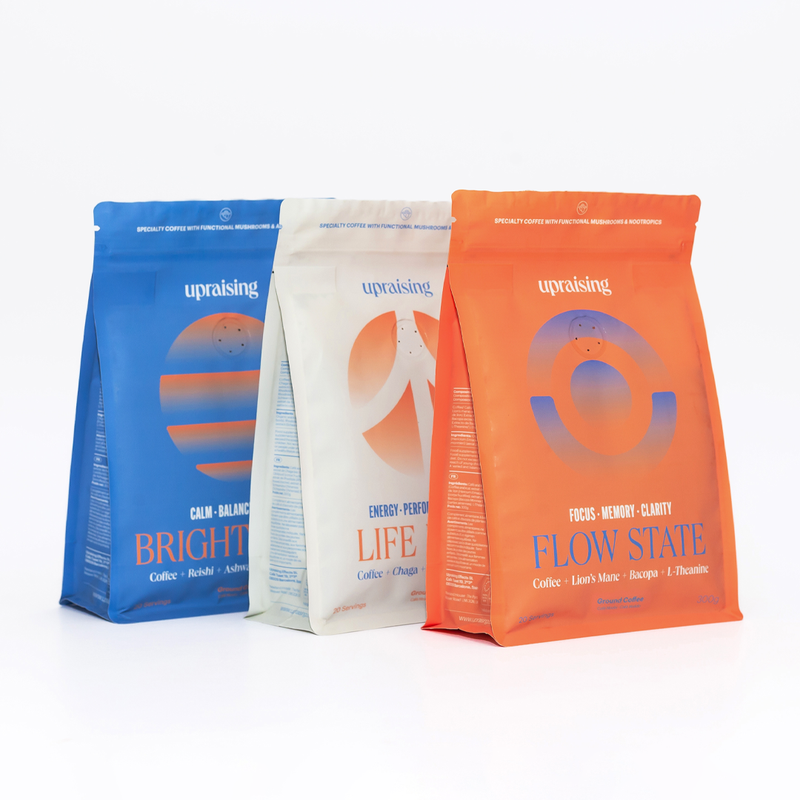
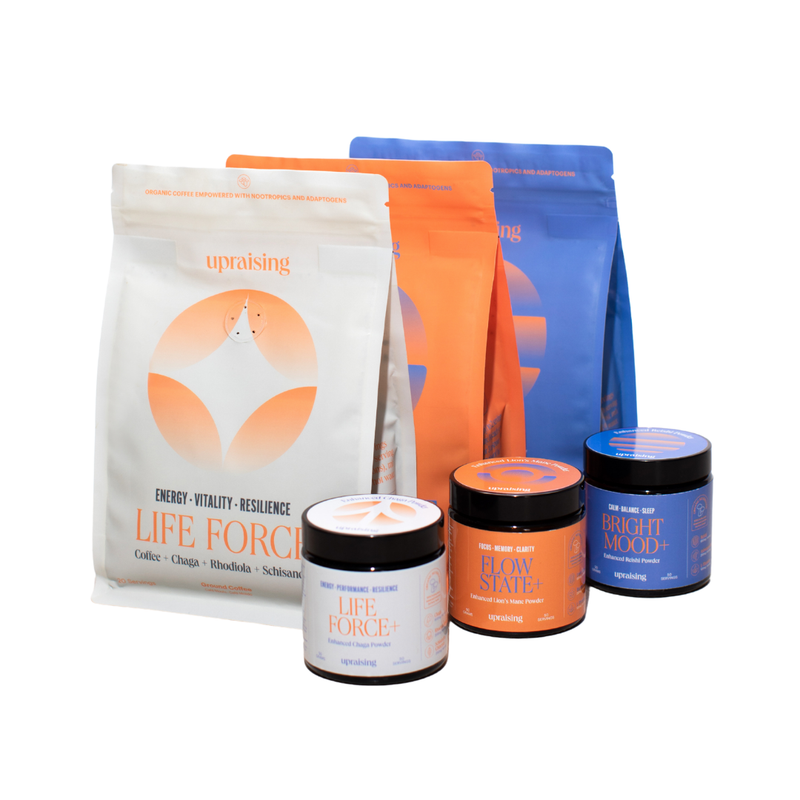
Upraising's Bright Mood Coffee combines 250mg of Reishi extract with Ashwagandha and L-Theanine in organic Colombian Arabica. It is designed for people who want to keep their coffee ritual without the cortisol spike that straight caffeine can sometimes cause.
Ashwagandha: Cortisol Modulation
Ashwagandha is one of the most studied adaptogens for stress. Clinical trials involving over 400 participants have shown it can reduce cortisol levels by up to 30 per cent in chronically stressed populations. The active compounds, called withanolides, appear to have GABA-mimetic effects, promoting calm without sedation.
What makes Ashwagandha particularly useful is its effect on evening cortisol. Elevated nighttime cortisol is a hallmark of chronic stress and one of the main reasons people lie awake despite being exhausted. By helping to normalise this pattern, Ashwagandha supports both the quality of your rest and your ability to actually feel recovered the next morning.
Rhodiola: Building Resilience
Rhodiola Rosea works differently from Reishi and Ashwagandha. Rather than primarily calming the stress response, it helps build your capacity to handle stress without tipping into overload. Studies suggest it moderates cortisol spikes during periods of high demand, whether physical or mental.
This makes it a good fit for people whose stress is not just about winding down at the end of the day, but about sustaining energy and focus through demanding periods without burning out. Upraising's Life Force Coffee pairs Rhodiola with Chaga and Schisandra for sustained, clean energy without the crash.
Why L-Theanine Matters More Than You Think
L-Theanine is an amino acid found naturally in green tea. It increases calming neurotransmitters like serotonin and dopamine, which is partly why a cup of tea feels different from a cup of coffee despite both containing caffeine.
What makes L-Theanine particularly relevant to this topic is its ability to promote what researchers describe as "calm alertness." It does not make you drowsy. It does not switch off your brain. It reduces the jittery, overstimulated quality that makes genuine rest so difficult for chronically stressed people.
Both Bright Mood and Flow State Coffee include 100mg of L-Theanine per serving. This is a meaningful dose, equivalent to roughly five cups of green tea, delivered alongside functional mushroom extracts and organic coffee.

Building a Stress Recovery Routine That Works
The goal is not to eliminate stress. That is unrealistic and, frankly, unhelpful. Some stress is productive. The goal is to ensure that your body can recover from stress efficiently, so it does not accumulate and become chronic.
Here is a practical framework. None of it requires special equipment or large amounts of time.
Morning: Set the Baseline
- Delay screen time for the first 20-30 minutes after waking
- Start with 5 minutes of breathwork or gentle stretching
- Choose a coffee that supports your stress response rather than spiking it. Bright Mood Coffee with Reishi, Ashwagandha, and L-Theanine is designed for exactly this
Midday: Interrupt the Accumulation
- Take a 10-minute walk, ideally outdoors
- Practice a 2-minute breathing reset: inhale for 4 counts, exhale for 6-8 counts
- Eat a proper meal away from your desk. Digestion activates the parasympathetic nervous system
Evening: Signal Safety
- Replace screen-based "relaxation" with one genuine recovery activity, at least three times per week
- Options: a walk, a bath, cooking, reading a physical book, stretching, conversation
- If you struggle with evening tension, consider a Bright Mood+ Powder mixed into a warm drink. The Reishi and Ashwagandha support the transition from alert to calm
The point is not to add more tasks to your day. It is to swap a few ineffective habits for ones that actually do the job. Five minutes of breathwork is worth more than two hours of scrolling when it comes to nervous system recovery.
Consistency Over Intensity
One of the most important things to understand about stress management is that it is not an event. It is a practice. A single yoga class will not undo months of chronic stress. A single good night's sleep will not reset a dysregulated HPA axis.
What works is small, consistent actions repeated over weeks and months. This is also true for adaptogens. Reishi, Ashwagandha, and Rhodiola all show their best results with sustained, daily use. They support your body's stress response systems over time, not in a single dose.
This is not glamorous advice. There is no dramatic before-and-after. But it is honest. And it is how stress management actually works for the vast majority of people.
When to Seek Professional Support
It is worth noting that chronic, unmanageable stress can be a sign of something deeper. If you experience persistent anxiety, prolonged low mood, sleep disruption that does not improve, or physical symptoms like chest tightness or digestive issues, speak to a healthcare professional.
Adaptogens, breathwork, and lifestyle adjustments are genuine tools for managing everyday stress. They are not substitutes for medical care when it is needed. Knowing the difference is part of a grounded approach to your own wellbeing.
The Bottom Line
"Relaxing" and recovering from stress are not the same thing. Collapsing in front of a screen might pause the conscious experience of pressure, but it does not give your nervous system what it needs to downregulate and restore.
Real recovery involves intention. Controlled breathing. Movement. Time outdoors. Genuine connection. And, where helpful, adaptogenic support that works with your body's own regulatory systems rather than trying to override them.
You do not need to overhaul your life. You need to understand the difference between distraction and recovery, and make small, consistent choices that favour the latter. That is not a quick fix. It is something better: an approach that actually works.
References
- Skog H, Määttä S, Säisänen L, Lakka TA, Haapala EA. Associations of screen time and physical activity with TMS-based measures of motor cortical excitability in adolescents. Neuroscience. 2025 Nov 10;587:98-107. doi: 10.1016/j.neuroscience.2025.09.054. Epub 2025 Oct 6. PMID: 41046067.
- Pedersen, J., Rasmussen, M.G.B., Sørensen, S.O. et al. Effects of limiting digital screen use on well-being, mood, and biomarkers of stress in adults. npj Mental Health Res 1, 14 (2022). https://doi.org/10.1038/s44184-022-00015-6