







How to Build All-Day Energy Without Increasing Caffeine
All-day energy without more caffeine — it sounds too good to be true, but the science makes a strong case for it. If your first instinct when energy dips is to reach for another coffee, you are not alone. But adding more caffeine is rarely the answer. The real question is why your energy is dipping in the first place.
Caffeine is a tool, not a fuel source. It works by blocking adenosine receptors in the brain — the receptors that accumulate throughout the day and make you feel tired. Caffeine does not actually generate energy. It masks the signal that tiredness is sending.
When you keep increasing the dose, two things happen. Your brain upregulates adenosine receptors to compensate, meaning you need more caffeine to get the same effect. And because caffeine has a half-life of around five to six hours, afternoon and evening doses start interfering with your sleep — which makes the next-day fatigue worse, and the cycle continues.
This guide is about breaking that cycle. Not by eliminating caffeine, but by building the conditions for genuine, sustained energy — so you need less of it to function well.
Why Your Energy Crashes in the First Place
Before looking at solutions, it helps to understand the mechanism. Energy crashes tend to have predictable causes. Address the causes, and the crashes reduce — without needing to consume more stimulants.
The Adenosine Debt Problem
Every hour you are awake, adenosine accumulates in the brain. This is your body’s way of building sleep pressure — a gradual, natural signal that you need rest. Caffeine blocks adenosine from binding to its receptors, temporarily suppressing that signal.
But the adenosine is still there. When caffeine wears off, it all hits at once. That is the mid-afternoon crash. And if you have been under-sleeping or over-caffeinating, the debt compounds over days and weeks.
Blood Sugar Fluctuations
The brain runs on glucose. When blood sugar spikes — from a high-carbohydrate meal, sugary drink, or processed snack — insulin responds sharply, and blood sugar drops below baseline. That drop is felt as fatigue, brain fog, and an urgent craving for more sugar or caffeine.
Stable blood sugar means stable energy. The two are closely connected, and this is one of the most actionable levers most people have.
Chronic Stress and Cortisol Dysregulation
Cortisol is your main alertness and energy hormone. In the morning, it should be high — this is called the cortisol awakening response, and it is one of your body’s most powerful natural energisers. By evening, it should be low.
Chronic stress, poor sleep, and relentless demands disrupt this arc. Cortisol stays elevated too long, then eventually flatlines. The result is wired-but-tired in the afternoon and exhausted but restless at night.
Managing this pattern is central to managing energy — and it is where adaptogens that support the stress response become genuinely useful.

Mitochondrial Fatigue
Mitochondria are the organelles inside your cells that produce ATP — the actual currency of cellular energy. When mitochondria are under-supported (through poor sleep, sedentary behaviour, micronutrient deficiencies, or oxidative stress), ATP production drops.
This is the kind of fatigue that caffeine does not really touch — the deep, cellular tiredness that persists even after a good night’s sleep. It requires a different approach.
The Foundations: What Actually Sustains Energy
No supplement, adaptogen, or functional mushroom replaces the fundamentals. These are the non-negotiables — the base layer on which everything else rests.
Sleep: The Most Underrated Energy Strategy
Sleep is not downtime. It is active recovery. During deep sleep, the brain clears metabolic waste via the glymphatic system, consolidates memory, and restores the neurochemical balance that drives daytime alertness.
Even one night of short sleep (under six hours) measurably reduces cognitive performance, raises cortisol, impairs glucose regulation, and increases adenosine accumulation. These are all direct contributors to next-day energy crashes.
Practical steps that improve sleep quality:
- Keep a consistent sleep and wake time, including weekends — this is the single most important sleep hygiene variable
- Cut caffeine by early afternoon (1–2pm is a reasonable cut-off for most people)
- Reduce screen brightness in the hour before bed — blue light suppresses melatonin production
- Keep the bedroom cool (16–19°C is the evidence-based range)
- Avoid large meals and alcohol close to bedtime — both fragment sleep architecture
Reishi mushroom is worth mentioning here. It contains triterpene compounds that interact with GABA receptors — the same pathway involved in the relaxation response. Research suggests it may support sleep onset and sleep quality without sedation. It is one of the ingredients in Upraising’s Bright Mood+, the reishi-based mushroom powder formulated for stress and mood support.

Nutrition for Stable Energy
The goal is not to eliminate carbohydrates — it is to prevent the sharp spikes and crashes that destabilise your energy across the day.
- Eat protein at breakfast. Protein slows glucose absorption, reduces mid-morning hunger, and supports neurotransmitter production. Eggs, Greek yoghurt, or a protein-containing smoothie all work.
- Pair carbohydrates with fat or fibre. This slows the absorption of glucose and flattens the insulin response.
- Walk after meals. Even a 10-minute walk after eating significantly blunts post-meal glucose spikes. The effect is well-documented and requires zero equipment.
- Do not skip meals. Skipping meals leads to hypoglycaemia, which the body counters with a cortisol spike — contributing to the stress-energy loop.
Micronutrients matter too. B vitamins (particularly B12, B6, and folate) are essential for energy metabolism at the cellular level. Magnesium supports over 300 enzymatic reactions, including those involved in ATP synthesis. Iron deficiency — common in women — directly impairs oxygen delivery to cells. These are worth checking via blood panel if fatigue is persistent.
Movement as an Energy Generator
It seems counterintuitive, but regular physical movement creates energy rather than depleting it. Exercise upregulates mitochondrial biogenesis — it stimulates the growth of new mitochondria in cells, increasing your baseline energy production capacity over time.
In the short term, a 20-minute walk raises BDNF (brain-derived neurotrophic factor), increases cerebral blood flow, and has measurable effects on attention and alertness for several hours. It is one of the most effective and accessible interventions for afternoon energy dips.
You do not need to train hard to see these benefits. Consistent, moderate movement — walking, cycling, swimming — applied regularly is what the research actually supports.
Adaptogens: Supporting Energy Through Stress Regulation
Adaptogens are a specific class of plants and fungi that help the body adapt to physical and psychological stress. They do not stimulate energy the way caffeine does — they support the biological systems that produce and sustain it. The distinction matters.
They work primarily through the HPA axis (hypothalamic-pituitary-adrenal axis) — the system that regulates your stress and cortisol response. When this system is chronically overloaded, energy suffers. Adaptogens help modulate that overload.
Ashwagandha for Cortisol and Fatigue

Ashwagandha (Withania somnifera) is one of the most studied adaptogens for stress and energy. Multiple randomised controlled trials have found it reduces serum cortisol levels and improves scores on fatigue, stress, and cognitive performance measures over 8–12 weeks of consistent use.
Its mechanism is partly through modulating the HPA axis — it reduces the over-reactivity that keeps cortisol elevated — and partly through supporting mitochondrial health. One study found ashwagandha extract improved VO2 max and reduced exercise-induced fatigue in healthy adults.
Ashwagandha is not a stimulant. Its energy-supporting effects come through reduction of the biological drain that chronic stress creates. The result is more of a stable floor than a ceiling-raising spike.
Rhodiola Rosea for Mental Fatigue

Rhodiola Rosea has one of the strongest evidence bases of any adaptogen for mental fatigue specifically. It has been studied in medical students during exam periods, physicians on night shifts, and military cadets under sustained stress — all showing meaningful reductions in fatigue and improvements in cognitive performance.
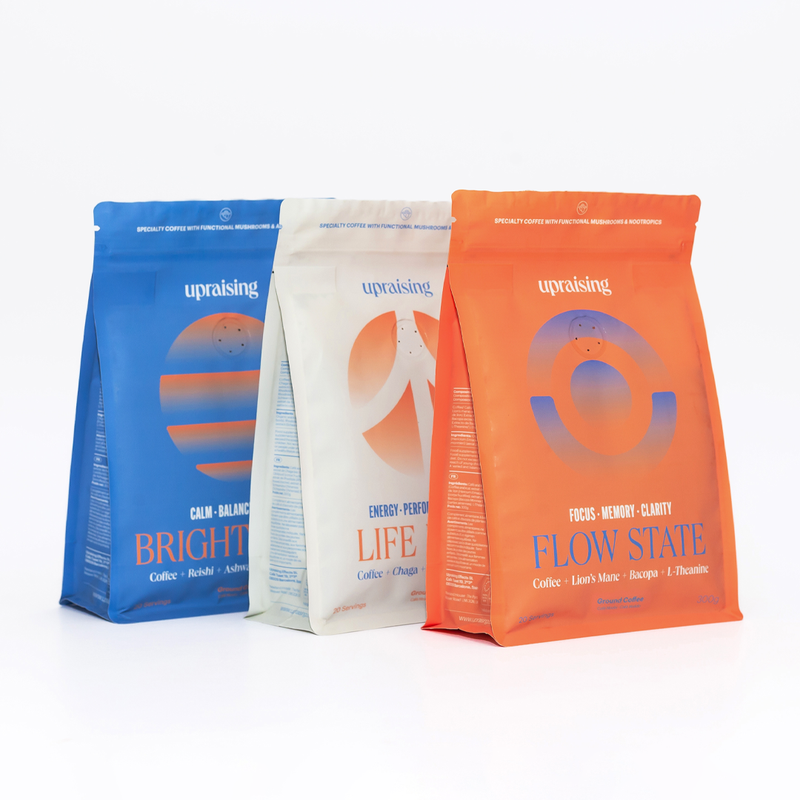
Rhodiola works in part by modulating monoamine oxidase (MAO) activity — relevant to dopamine and serotonin availability — and in part by supporting mitochondrial function. It is an ingredient in the Upraising Life Force Coffee, which also contains Chaga and Schisandra Chinensis.
Rhodiola is particularly well suited to people whose fatigue is driven by mental overload and stress rather than physical depletion. If your energy dips are accompanied by mental flatness and difficulty concentrating, it is worth exploring.
How to Use Adaptogens Effectively
A few things worth knowing before you start:
- Adaptogens are not fast-acting. Most research studies run for 4–12 weeks. Consistent daily use is essential — sporadic supplementation yields limited benefit.
- They work best as part of a lifestyle foundation, not as a replacement for it. Sleep, nutrition, and movement come first.
- Start with one at a time. Adding multiple adaptogens simultaneously makes it impossible to know what is working.
- Timing matters. Stimulating adaptogens like Rhodiola are generally better taken in the morning or early afternoon. Calming adaptogens like Ashwagandha can be taken at any time, though some people prefer evening.
Functional Mushrooms: A Different Kind of Energy Support
Functional mushrooms support energy through mechanisms that are entirely different from adaptogens or caffeine. They work at the cellular level — supporting mitochondrial function, immune regulation, and neurological health — rather than through hormonal or neurotransmitter pathways.
Lion’s Mane for Mental Clarity and Sustained Focus

Lion’s Mane (Hericium erinaceus) is the most studied functional mushroom for cognitive performance. It stimulates the production of Nerve Growth Factor (NGF) — a protein essential for the growth, maintenance, and survival of neurons.
The practical effect is not an energy spike. It is a gradual improvement in mental clarity, focus, and cognitive resilience — the kind of underlying cognitive health that makes sustained, focused work feel less effortful. A 16-week randomised controlled trial found adults taking Lion’s Mane showed significantly improved cognitive function compared to placebo, with benefits increasing over the supplementation period.
Lion’s Mane is central to two Upraising products: Flow State Coffee, which combines it with Bacopa Monnieri and L-Theanine in a specialty arabica blend, and Flow State+, the enhanced mushroom powder for those who want to add it to their existing drinks or recipes.
Chaga for Cellular Vitality
Chaga (Inonotus obliquus) is one of the most antioxidant-dense substances found in nature. It supports the body’s defences against oxidative stress — which is one of the primary drivers of mitochondrial dysfunction and cellular fatigue.
This is not the kind of energy you feel immediately. It is the kind you notice over time — a baseline resilience that means illness, stress, and demanding periods take less out of you. Upraising’s Life Force+ is a Chaga-based mushroom powder formulated for vitality and long-term cellular support.
Chaga also features in Life Force Coffee alongside Rhodiola and Schisandra — a combination that pairs Chaga’s antioxidant support with Rhodiola’s anti-fatigue adaptogenic properties.
Reishi for Recovery and Sleep Quality
Reishi is less about daytime alertness and more about the recovery that makes daytime alertness possible. Its key compounds — triterpenes and beta-glucans — support immune regulation, reduce inflammatory markers, and interact with the nervous system in ways that promote relaxation and improved sleep quality.
Better sleep means better next-day energy. If poor recovery is part of your energy problem, Reishi is a reasonable place to start. The Bright Mood+ powder contains organic Reishi alongside adaptogens for stress and mood support.
Making Coffee Work Better: The Functional Coffee Approach
If you drink coffee — and most people who are reading this do — the goal is not necessarily to drink less. It is to get more from what you drink, without the downsides.
The standard coffee experience: a sharp rise in alertness, some jitteriness, a spike in cortisol, then a crash at the three to four hour mark that prompts another cup. Repeat.
Functional coffee — coffee combined with adaptogens, nootropics, and mushroom extracts — is designed to change that arc. Not by adding more stimulation, but by moderating the less useful effects of caffeine and supplementing it with ingredients that support sustained cognitive performance.
The key additions and why they matter:
 L-Theanine |
An amino acid from green tea that promotes alpha brain wave activity — the relaxed, alert state associated with focused work. It smooths caffeine’s stimulating edge without blunting alertness, reducing jitteriness and extending the effective window before the crash. It is included in Flow State Coffee. |
 Lion’s Mane |
Supports the neurological substrate of focus and clarity, working alongside caffeine rather than in competition with it. |
 Rhodiola |
Reduces the cortisol-raising effect that caffeine can amplify under stress, and extends mental endurance. Included in Life Force Coffee. |
 Chaga |
Contributes antioxidant support that mitigates some of the oxidative effects of regular caffeine consumption. |
The result, across all of Upraising’s coffees, is a cup that supports sustained cognitive performance rather than just a brief stimulant window. It is not about drinking more coffee — it is about drinking better coffee.
A Practical Daily Energy Framework
Here is how these strategies layer into a realistic day. The goal is not perfection — it is a consistent set of defaults that reduce the conditions for energy crashes.
Morning
- Get outside within 30 minutes of waking. Morning light anchors your circadian rhythm and activates the cortisol awakening response — your body’s own natural energiser.
- Eat a protein-led breakfast before your first coffee if possible. This stabilises blood sugar before caffeine amplifies cortisol.
- If you drink coffee, consider a functional blend. The combination of caffeine with adaptogens and nootropics supports a cleaner, more sustained energy arc without adding stimulants.
Midday
- Keep lunch balanced: lean protein, vegetables, healthy fats, and moderate complex carbohydrates. Avoid high-carbohydrate meals eaten quickly at a screen.
- Walk after eating. Ten minutes is enough to meaningfully reduce the post-lunch glucose dip that often triggers the afternoon energy slump.
- If you feel a dip around 1–2pm, check in on hydration first. Even mild dehydration is a significant driver of cognitive fatigue.
Afternoon
- This is the danger zone for an extra coffee. If you genuinely need alertness support, consider a functional mushroom powder like Flow State+ in a non-caffeinated drink — you get cognitive support without adding caffeine that will disrupt your sleep.
- Keep your caffeine cut-off at 1–2pm. This is one of the most impactful changes most people can make to their energy the following morning.
Evening
- Wind down deliberately. Dim lights at least an hour before bed. Step away from work-related thinking.
- If stress or anxious thinking disrupts your sleep, Reishi and Ashwagandha are both worth exploring as evening supplements — they support the relaxation response without sedation.
- Protect your sleep. The single biggest thing you can do for tomorrow’s energy happens tonight.
How Long Before You Notice a Difference?
This is the honest part. Most of these strategies are not fast. Adaptogens typically take four to eight weeks of consistent use before the effects are clearly noticeable. Functional mushrooms like Lion’s Mane are studied over 12–16 week periods. Sleep improvements take days to weeks to translate into meaningfully improved daytime energy.
But the lifestyle foundations — cutting off caffeine earlier, eating protein at breakfast, walking after lunch, getting outside in the morning — these can show results within days. They are the fastest levers, and they make everything else work better.
The pattern that works is: start with the foundations, add functional ingredients consistently, give them time, and resist the urge to keep escalating caffeine while you wait. The escalation is what keeps many people stuck in the cycle.
The Bottom Line
All-day energy is not built by consuming more caffeine. It is built by reducing the biological conditions that drain it — disrupted sleep, unstable blood sugar, chronic cortisol elevation, and mitochondrial stress — and by supporting the systems that generate it sustainably.
Adaptogens like Ashwagandha and Rhodiola, functional mushrooms like Lion’s Mane and Chaga, and smarter use of caffeine are all meaningful tools. But they are tools that work with a solid foundation, not instead of one.
Start with sleep. Add movement. Stabilise your meals. Then layer in functional ingredients consistently and give them time to do what the evidence suggests they can.
That is how you build energy that lasts — without needing to reach for another cup.