






What "Clean Energy" Actually Means (and Why It Matters)
Clean energy is one of those phrases that gets used everywhere -- on supplement labels, coffee bags, energy drinks, social media ads. But what does it actually mean? And more importantly, does it mean anything useful, or is it just marketing?
The honest answer: it depends on who is saying it. "Clean energy" has no regulated definition. Any brand can slap it on a product and call it a day. That does not mean the concept is worthless -- it means you need to understand what separates genuine clean energy from the label alone.
This matters because how you get your energy changes how you feel, how long it lasts, and what it costs your body over time. A 200mg caffeine hit from a sugar-loaded energy drink and a 200mg caffeine hit from a functional coffee paired with adaptogens are not the same experience, even though the stimulant dose is identical.
This guide breaks down what clean energy should mean -- biologically, practically, and in the context of what you put in your body every morning.

What "Clean Energy" Should Actually Mean
If we strip away the marketing, clean energy comes down to three things: what is in the product, what is not in the product, and how the energy it provides actually behaves in your body.
What Is in It: Ingredients That Work With Your Biology
Clean energy starts with ingredients your body can recognise and process efficiently. That means natural caffeine sources rather than synthetic caffeine. It means functional compounds -- adaptogens, nootropics, amino acids -- that modulate how energy feels, not just whether you feel awake.
The difference is not trivial. Synthetic caffeine anhydrous, the kind in most energy drinks, is absorbed faster and more aggressively than caffeine from coffee or tea. That rapid absorption is what produces the sharp spike-and-crash pattern most people associate with energy products.
Natural caffeine from coffee beans is absorbed more gradually, especially when paired with other compounds. Add Lion's Mane for cognitive support, L-Theanine for calm focus, or Rhodiola for stress resilience, and the energy arc changes meaningfully -- smoother onset, longer duration, gentler offset.
What Is Not in It: The Absence of Junk
This is where "clean" earns its name. A genuinely clean energy product should contain:
- No added sugar. Sugar creates a rapid glucose spike followed by an insulin-driven crash -- the opposite of sustained energy.
- No artificial sweeteners. Sucralose, aspartame, and acesulfame-K are common in instant mushroom blends. Their long-term effects remain debated, and they train your palate to expect hyper-sweetness.
- No artificial flavouring or colouring. These contribute nothing to function and add unnecessary chemical load. Not to mention the impact it could have on your gut health.
- No proprietary blends that hide dosages. If a product lists a "focus blend" at 500mg but contains six ingredients, the effective dose of each is likely too low to do anything meaningful.
Clean means transparent. You should be able to read every ingredient, understand why it is there, and know the dose.
How the Energy Behaves: The Arc Matters
This is the part most people overlook. Clean energy is not just about what goes in -- it is about the shape of the energy it produces across hours, not minutes.
Conventional caffeine products produce a steep curve: sharp rise, brief peak, rapid decline. That decline often lands you below your baseline, which is why the second and third cups feel necessary rather than optional.
Clean energy should produce a gradual rise, a sustained plateau, and a gentle return to baseline. No jitters on the way up. No crash on the way down. This is not fantasy -- it is what happens when caffeine is paired with compounds that modulate its effects.
L-Theanine is the best-studied example. It promotes alpha brain wave activity -- the relaxed, alert state associated with focused work -- while dampening the anxiety and jitteriness that caffeine can trigger. The combination has been studied repeatedly and consistently outperforms caffeine alone on measures of attention and cognitive performance.

Why the Way You Get Energy Matters More Than the Amount
Most conversations about energy focus on quantity. How much caffeine? How many milligrams? How many cups?
But the quality of energy -- how it feels, how long it lasts, and what it costs your body -- is far more relevant to how you actually function across a day.
The Cortisol Problem
Caffeine raises cortisol. That is part of how it makes you feel alert. In moderation, this is fine -- cortisol is a natural alertness hormone, and a morning spike is part of your body's normal rhythm.
But when caffeine is consumed in large doses, combined with sugar, or stacked throughout the day, cortisol stays elevated far longer than it should. Chronic cortisol elevation is linked to disrupted sleep, increased abdominal fat storage, impaired immune function, and -- ironically -- worse energy the following day.
This is the hidden cost of dirty energy: the crash you feel tomorrow is partly caused by the cortisol disruption from today. Understanding how to manage cortisol naturally is central to breaking that cycle.
The Blood Sugar Connection
Energy drinks and sweetened coffees often contain 25-40g of sugar per serving. That sugar creates a rapid glucose spike, followed by a sharp insulin response, followed by a blood sugar dip that your body interprets as fatigue.
This glucose rollercoaster is one of the main reasons people reach for another caffeinated drink mid-afternoon. The fatigue is real -- but it is not caused by a lack of caffeine. It is caused by unstable blood sugar, and more caffeine does not fix it.
Clean energy products avoid this entirely by containing no added sugar. The energy they provide comes from functional ingredients acting on genuine biological pathways -- not a sugar rush disguised as vitality.
The Sleep Tax
Caffeine has a half-life of five to six hours. If you drink a conventional energy product at 3pm containing 200mg of caffeine, you still have roughly 100mg circulating at 8-9pm. That is enough to meaningfully reduce deep sleep duration and sleep quality -- even if you fall asleep at your normal time.
Reduced sleep quality means higher adenosine accumulation the next morning, which means more fatigue, which means more caffeine. This is the cycle that keeps people stuck.
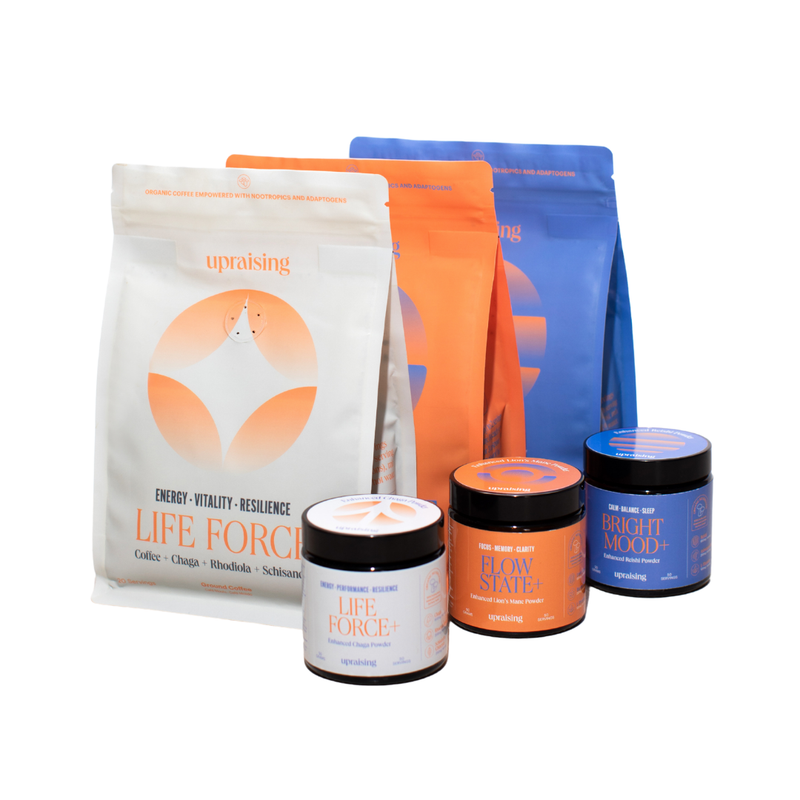
Clean energy addresses this in two ways: by encouraging moderate, intentional caffeine use in the first half of the day, and by offering caffeine-free functional alternatives for the afternoon. Our mushroom powders -- like Flow State+ -- provide cognitive support without any caffeine at all, making them suitable for afternoon use without sleep disruption.
The Ingredients Behind Genuinely Clean Energy
Now that we have established what clean energy means in principle, here are the specific ingredients that deliver it -- and what the evidence actually says about each.
Adaptogens: Energy Through Stress Regulation
Adaptogens do not stimulate energy directly. They support the biological systems -- primarily the HPA axis -- that regulate your stress response and, by extension, your energy levels. When stress is managed better, energy improves as a downstream effect.

Ashwagandha is one of the most studied adaptogens for cortisol reduction and fatigue. Multiple randomised controlled trials show it reduces serum cortisol and improves self-reported energy and cognitive performance over 8-12 weeks of consistent use. It does not create energy -- it reduces the biological drain that chronic stress creates.

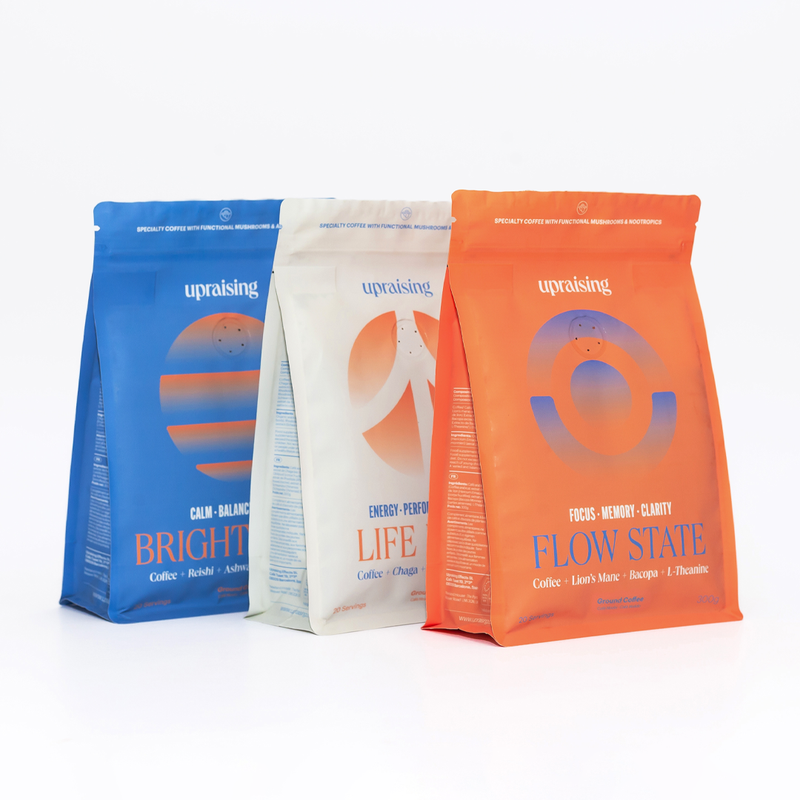
Rhodiola Rosea has the strongest evidence base for mental fatigue specifically. It has been studied in physicians on night shifts, students during exam periods, and military cadets under sustained stress -- consistently showing reduced fatigue and improved cognitive performance. Rhodiola is a key ingredient in our Life Force Coffee, alongside Chaga and Schisandra.

Schisandra Chinensis rounds out the adaptogenic picture. It is classified as a "five-flavour berry" in traditional Chinese medicine and has been studied for its effects on mental performance under stress. It supports liver function and works synergistically with other adaptogens.
Functional Mushrooms: Cellular-Level Support
Functional mushrooms work differently from both caffeine and adaptogens. They operate at the cellular level -- supporting mitochondrial function, immune regulation, and neurological health.
Lion's Mane stimulates production of Nerve Growth Factor (NGF), a protein essential for neuron growth and maintenance. The practical effect is not an energy spike -- it is a gradual improvement in mental clarity and cognitive resilience that builds over weeks of consistent use. A 16-week RCT found adults taking Lion's Mane showed significantly improved cognitive function compared to placebo.
Chaga is one of the most antioxidant-dense substances found in nature. It supports the body's defences against oxidative stress -- a primary driver of mitochondrial dysfunction and the deep cellular fatigue that caffeine does not touch. This is the kind of support you notice over time: a baseline resilience that means demanding periods take less out of you.
Reishi supports the recovery side of the energy equation. Its triterpene compounds interact with GABA receptors -- the same pathway involved in the relaxation response. Research suggests it supports sleep onset and sleep quality, and better sleep means better next-day energy. Our Bright Mood+ is a reishi-based powder formulated for stress and mood support.
L-Theanine: The Caffeine Modulator
L-Theanine deserves its own mention because of how effectively it changes the character of caffeine. Found naturally in green tea, L-Theanine is an amino acid that promotes alpha brain wave activity -- the neural state associated with calm, focused attention.
When taken alongside caffeine, L-Theanine reduces jitteriness, smooths the energy curve, and extends the window of productive alertness. Multiple studies confirm this combination improves attention and reaction time while reducing the anxiogenic effects of caffeine alone.
This is why it is a core ingredient in Flow State Coffee, alongside Lion's Mane and Bacopa Monnieri. The combination targets focus and mental clarity from multiple pathways simultaneously.
How to Tell If a Product Is Genuinely "Clean"
The term is unregulated, so the responsibility falls on you. Here is a practical checklist.
Read the Full Ingredient List
Every ingredient should be identifiable. If you see numbers, codes, or names you cannot pronounce or look up, that is a signal. Clean products use recognisable ingredients at disclosed doses.
Check the Sugar Content
Any product claiming "clean energy" while containing more than a few grams of sugar per serving is contradicting itself. Sugar-driven energy is, by definition, the spike-and-crash pattern that clean energy is supposed to avoid.
Look for Functional Doses, Not Fairy Dust
This is the most common issue. Many products list impressive-sounding ingredients -- Lion's Mane, Ashwagandha, Rhodiola -- but at doses too low to have any meaningful effect. If a product does not disclose the dose of each functional ingredient, be sceptical.
Evidence-based doses vary by ingredient, but as a rough guide:
- Lion's Mane: Most studies use 500mg-3g per day
- Ashwagandha (root extract): 300-600mg per day in studies showing cortisol reduction
- Rhodiola Rosea: 200-600mg per day in fatigue studies
- L-Theanine: 100-200mg per serving alongside caffeine
Evaluate the Energy Source
Where does the energy come from? Natural caffeine from coffee or tea behaves differently in the body than synthetic caffeine anhydrous. And products that combine caffeine with stress-modulating adaptogens or focus-supporting nootropics offer a qualitatively different experience from caffeine alone.
What Clean Energy Looks Like in Practice
Theory is useful. Application is what matters. Here is how clean energy translates into a realistic daily routine.
Morning: Intentional Caffeine
Rather than reaching for whatever is fastest, choose a coffee that does more than just deliver caffeine. A functional blend like Flow State Coffee or Life Force Coffee pairs caffeine with ingredients that extend and smooth its effects.
Eat something with protein before or alongside your coffee. This stabilises blood sugar and prevents the cortisol double-hit of caffeine on an empty stomach.

Midday: Protect the Plateau
The goal between late morning and mid-afternoon is to maintain stable energy rather than chasing peaks. That means balanced meals, adequate hydration, and movement after eating.
If you feel a dip, check hydration first. Even mild dehydration measurably impairs cognitive function and energy. A glass of water and a 10-minute walk often do more than a second coffee.
Afternoon: Support Without Stimulation
This is where clean energy really differentiates itself. Instead of adding more caffeine -- which will compromise tonight's sleep and tomorrow's energy -- use caffeine-free functional support.
A mushroom powder like Flow State+ or Life Force+ in a warm drink provides cognitive and cellular support without any stimulant. This is the kind of support that keeps the afternoon productive without creating a sleep debt.
Evening: Invest in Tomorrow's Energy
Clean energy is not just about what you consume during the day. It is equally about protecting the recovery that makes tomorrow's energy possible.
Dim lights in the evening. Cut screens where you can. If stress or racing thoughts disrupt your wind-down, Reishi supports relaxation through its interaction with GABA pathways -- without sedation.
The best energy strategy for tomorrow starts tonight.
Clean Energy Is a System, Not a Product
This is the point that gets lost in most conversations about energy. No single product -- no matter how clean its ingredients -- replaces the fundamentals.
Sleep. Nutrition. Movement. Stress management. These are the base layer. Functional ingredients are the support layer -- they amplify the foundations, but they cannot substitute for them.
What clean energy products can do is make the support layer genuinely useful rather than counterproductive. A coffee that delivers caffeine alongside adaptogens that modulate the stress response is materially different from a coffee that just delivers caffeine. A mushroom powder that supports mitochondrial function and cognitive health is materially different from a sugar-loaded energy shot.
The distinction matters. Not because functional products are magic -- they are not -- but because the alternative, the conventional approach of more caffeine, more sugar, more stimulation, has clear and well-documented costs.
The Bottom Line
Clean energy is not a buzzword. Or at least, it should not be. At its core, it means energy that comes from ingredients your body can use well, delivered in a way that supports sustained performance rather than short spikes, without the hidden costs of sugar crashes, cortisol disruption, and sleep debt.
Look for transparency in ingredients. Look for functional doses, not decorative ones. Look for products that pair caffeine with compounds that make it work better -- or that provide cognitive support without caffeine at all.
And remember that the cleanest energy strategy is still the one built on consistent sleep, stable nutrition, regular movement, and managed stress. Everything else is support. Good support matters -- but it is support, not a shortcut.
Start with the foundations. Add clean, functional ingredients consistently. Give them time. That is how energy becomes something you build, not something you borrow.