







Why Metabolic Health Starts With Stress (Not Diet)
How does stress affect my metabolism? More than most people realise. Before calories, before macros, before supplements — metabolic health is shaped by cortisol, your primary stress hormone.
When stress is regulated, metabolism feels stable. Energy is consistent. Focus is sharp. Hunger signals make sense. When stress is chronic, metabolism becomes reactive.
Weight fluctuates. Cravings increase. Fatigue lingers. And no diet seems to fully fix it.
At Upraising, we approach metabolic health through stress physiology first. Adaptogens, functional mushrooms and smarter caffeine delivery systems aren’t shortcuts. They’re tools that help the body regulate before it tries to optimise.
This article reframes metabolism through the lens of cortisol, insulin sensitivity and nervous system balance — and explains why sustainable energy starts there.
Metabolism Is a Stress-Responsive System
Your metabolism is not just about how many calories you burn. It is a dynamic system that responds to perceived safety and stress.
Cortisol plays a central role. In the short term, cortisol increases blood sugar to provide fast energy. This is useful when facing real danger.
But modern stress is rarely physical. It’s emails, deadlines, poor sleep, overtraining, under-eating and constant stimulation.
When cortisol stays elevated:
- Blood sugar regulation becomes unstable
- Insulin sensitivity decreases
- Fat storage signals increase
- Energy feels wired but inconsistent
This is why stress affects metabolism even when diet hasn’t changed.
How Does Stress Affect My Metabolism?
Chronic stress changes how your body partitions energy. It prioritises survival over optimisation.
1. Cortisol and Blood Sugar
Cortisol raises blood glucose to fuel immediate action. Over time, repeated spikes reduce insulin sensitivity.
This can lead to:
- Midday energy crashes
- Sugar cravings
- Brain fog
- Fatigue despite adequate calories
2. Stress and Fatigue Loops
When energy drops, most people reach for caffeine. Fast caffeine delivery can spike cortisol further.
The cycle looks like this:
- Stress elevates cortisol
- Energy dips
- Caffeine spikes cortisol again
- Crash follows
- Repeat
This loop keeps metabolism reactive instead of resilient.
Metabolic Health Is Nervous System Health
Metabolism is regulated by the autonomic nervous system. When the body perceives safety, it invests in repair and efficiency.
When it perceives threat, it conserves and stores.
This is why focusing only on diet misses the foundation. Without stress regulation, nutritional strategies often feel temporary.
Adaptogens: Supporting Stress Before Restriction
Adaptogens help the body adapt to stress rather than amplify it. They do not block cortisol entirely. They modulate the response.
Functional mushrooms and plant adaptogens support:
- Cortisol balance
- Antioxidant capacity
- Energy efficiency
- Mental clarity under pressure
This makes them particularly relevant for metabolic health.
Yerba Mate and Metabolic Rhythm
Yerba mate is often associated with appetite regulation and energy. Unlike high-dose synthetic stimulants, it delivers caffeine alongside polyphenols and plant compounds.
This creates a more gradual energy curve. When used thoughtfully, yerba mate can support metabolic rhythm without sharp crashes.
Upraising Full Color includes yerba mate as part of a broader formulation designed for clean stimulation. The goal isn’t intensity. It’s usable energy.

Mushroom Coffee: A Smarter Stress-Energy Interface
Traditional coffee delivers caffeine quickly. Mushroom coffee pairs caffeine with functional mushrooms and adaptogens.
This changes how the body experiences stimulation. Instead of pushing cortisol sharply higher, adaptogens help regulate the response.
Life Force: Supporting Physical and Metabolic Resilience
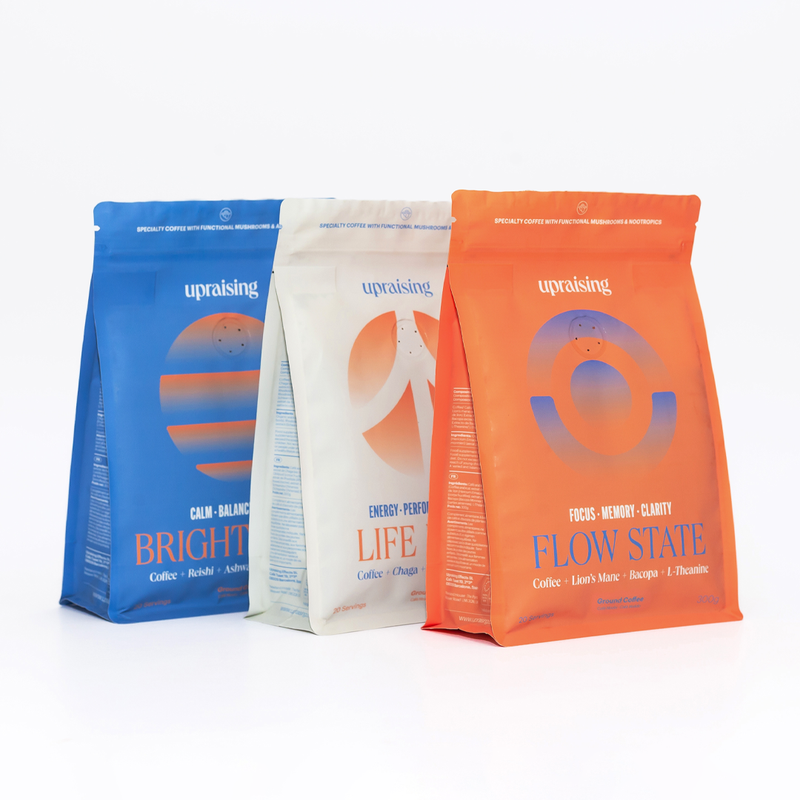
Life Force combines specialty Arabica coffee with adaptogens like Rhodiola and Schisandra. These compounds are known for supporting endurance and stress adaptation.
By improving resilience to physical stress, Life Force helps reduce fatigue loops that disrupt metabolism.

Bright Mood: Calm Energy That Supports Metabolic Stability
Bright Mood combines specialty Arabica coffee with L-theanine, reishi and ashwagandha. Instead of delivering caffeine alone, it pairs stimulation with nervous system support.
- L-Theanine: Helps smooth caffeine’s effect, reducing sharp cortisol spikes.
- Reishi: Traditionally used to support stress regulation and long-term nervous system balance.
- Ashwagandha: Known for supporting healthy cortisol levels under chronic stress.
When cortisol is better regulated, energy becomes more predictable. That stability supports insulin sensitivity, focus and sustainable metabolic health.

Full Color: Clean Stimulation Without the Crash
Full Color is built around yerba mate, delivering caffeine in a plant-based matrix that feels smoother and more gradual than high-dose coffee alone. It’s designed for people who want mental clarity and physical energy without overstimulation.
By avoiding sharp spikes and repeated crashes, Full Color helps reduce the stress-fatigue loop that can disrupt metabolism. It supports steady output — not urgency.
Cortisol and Insulin Sensitivity
Insulin sensitivity determines how efficiently cells use glucose. Chronic stress can impair this process.
Over time, impaired insulin sensitivity contributes to:
- Energy volatility
- Increased fat storage
- Difficulty maintaining body composition
Supporting cortisol balance indirectly supports insulin function. This is why stress management is foundational for metabolic health.
Energy, Focus & Weight Are Stress Signals
Many people interpret fatigue or weight changes as diet failures. Often, they are stress signals.
When cortisol is high:
- Sleep quality decreases
- Recovery slows
- Hunger hormones shift
Addressing stress physiology first creates a more stable platform for nutrition to work.
A Practical Framework for Metabolic Support
Improving metabolism does not require extreme restriction. It requires consistency and regulation.
- Stabilize sleep and light exposure.
- Reduce rapid caffeine spikes.
- Introduce adaptogens consistently.
- Fuel adequately before restricting.
Products like Life Force and Full Color are designed to support this process. They work best when part of a daily rhythm, not as isolated hacks.
Why Stress-First Metabolism Lasts Longer
Diets can change inputs. Stress regulation changes the operating system.
When cortisol is balanced:
- Energy feels steady
- Focus improves
- Cravings decrease
- Metabolism becomes predictable
This is the foundation of long-term metabolic health.
Why Upraising
Upraising was built on the idea that energy should feel sustainable.
Adaptogens, functional mushrooms and thoughtfully delivered caffeine create synergy. They help the body regulate stress while still supporting productivity.
Metabolic health does not start with restriction. It starts with resilience.

Final Thoughts
If you’ve asked, “How does stress affect my metabolism?” the answer is clear: stress shapes how your body uses energy.
By addressing cortisol first, you build a stable base. From there, nutrition and movement become more effective.
Sustainable energy is not about pushing harder. It’s about regulating smarter.