







What Happens in Your Body When You Drink Mushroom Coffee Daily
If you’re wondering what happens when you drink mushroom coffee daily, you’re not alone. Mushroom coffee has moved from niche wellness shelves into everyday routines — but not because it’s trendy. People are turning to it because regular coffee often delivers energy with side effects: jitters, crashes, digestive discomfort, or scattered focus.
Mushroom coffee isn’t about quitting caffeine. It’s about improving how caffeine works in the body. By pairing specialty coffee with functional mushrooms, adaptogens and nootropics, the goal shifts from stimulation to support.
At Upraising, mushroom coffee is built for consistency. No sweeteners. No flavour tricks. Just clean Arabica coffee, fruiting-body mushroom extracts and adaptogens chosen for real-world performance. The kind of daily ritual that compounds benefits over time.
This guide breaks down what actually happens in your body when mushroom coffee becomes part of your daily routine — from day one to long-term cognitive longevity.
First, What Is Mushroom Coffee — Really?
Mushroom coffee is not coffee that tastes like mushrooms. It’s regular coffee blended with functional mushroom extracts and adaptogens.
The mushrooms used are not culinary mushrooms. They’re functional mushrooms like Lion’s Mane, Chaga and Reishi, traditionally used to support cognition, immunity and stress resilience.
At Upraising, all blends use fruiting body extracts only. Never mycelium. This matters because the fruiting body contains the compounds — beta-glucans, triterpenes, polysaccharides — linked to real benefits.

Day 1–3: How Your Energy Feels Different
One of the first things people notice when switching to mushroom coffee is not a spike — but a smoother curve.
Regular coffee increases cortisol quickly. For some people, that’s motivating. For others, it feels like anxiety. Mushroom coffee moderates that response.
With blends like Upraising Life Force or Bright Mood, caffeine is paired with adaptogens and nootropics that support the nervous system rather than overwhelm it.
- Less jittery stimulation
- More stable alertness
- Reduced “wired but tired” feeling
This doesn’t mean caffeine disappears. It means its effects feel more usable.

Week 1–2: Nervous System Regulation
After the first week, the nervous system starts adapting to a more balanced input.
Adaptogens work by supporting the body’s stress response — not suppressing it. They help the system respond appropriately rather than excessively.
Ingredients like L-theanine and Reishi (found in Bright Mood) help soften cortisol spikes while maintaining alertness.
- Improved focus without tension
- Fewer energy crashes
- Calmer transitions between tasks
This is where many people realise the difference between stimulation and support.
Caffeine, Adaptogens and Cortisol
Cortisol isn’t bad. It’s essential. But daily overstimulation keeps cortisol elevated longer than necessary.
Mushroom coffee changes caffeine delivery. Instead of a sharp peak, the curve flattens.
Adaptogens like Rhodiola (in Life Force) and Ashwagandha (in Bright Mood) help regulate how the body perceives stress — physical and mental.
- More predictable energy
- Better stress tolerance
- Improved resilience under workload

Month 1: Cognitive Support and Mental Clarity
Cognitive effects tend to show with consistency, not intensity.
Lion’s Mane, present in Upraising Flow-focused blends, is associated with nerve growth factor (NGF), which plays a role in cognitive longevity.
This doesn’t feel like stimulation. It feels like:
- Clearer thinking
- Better task switching
- More sustained attention
This is where mushroom coffee shifts from “interesting” to “non-negotiable.”
Digestive and Gut-Brain Effects
Coffee can irritate digestion for many people. Mushroom coffee often feels gentler.
Functional mushrooms like Chaga (Life Force) support gut health through antioxidant and prebiotic-like effects.
- Less stomach discomfort
- Reduced inflammation
- Better gut-brain communication
Since the gut and brain are tightly linked, this often translates into better mood and energy regulation.
Sleep Quality (Yes, Even With Coffee)
One of the more surprising long-term effects is improved sleep.
Mushroom coffee doesn’t act like a sedative. It supports sleep indirectly by lowering stress and regulating cortisol earlier in the day.
For example: a randomised, double-blind, placebo-controlled trial found that daily supplementation with standardised Ashwagandha extract significantly improved sleep efficiency, total sleep time and other sleep quality measures compared to placebo after six weeks.
Therefore, when caffeine stress is reduced during the morning with support from these adaptogens, nighttime rest improves naturally.

Metabolic and Physical Resilience
Chronic stress impacts metabolism. Adaptogens help close that loop.
Blends like Life Force support physical performance, energy metabolism and recovery — especially when paired with movement.
- More consistent training energy
- Reduced fatigue
- Better recovery perception
Why Consistency Matters More Than Dosage
Functional mushrooms and adaptogens aren’t quick fixes.
Their benefits compound with daily use. Skipping days resets the signal.
That’s why mushroom coffee works so well — it attaches benefits to an existing habit instead of creating a new one.
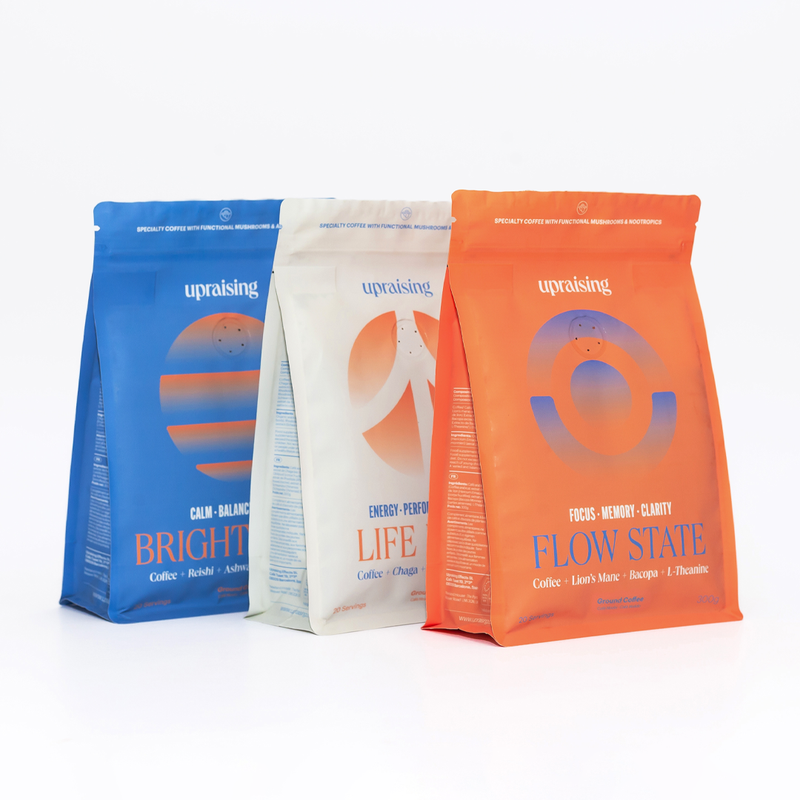
Choosing the Right Upraising Blend for Your Day
 |
 |
 |
|
Built for physical energy, resilience and stress response. Combines Chaga, Rhodiola and Schisandra to support sustained performance without a crash. |
Designed for deep focus and mental clarity. A functional coffee blend supporting cognition, creativity and calm alertness when you need to think clearly. |
Supports calmer focus and nervous system balance. Features Reishi, Ashwagandha and L-theanine to reduce stress while staying mentally present. |
Different days ask for different kinds of support. Many people rotate blends based on training load, workload, or how their nervous system feels that morning.